It’s not my fault I treated you like that, I have depression

This is something I have been meaning to write about for a while. I feel some people might not agree, but it’s something more people need to understand.

Mental illness is still being stigmatised. Some disorders are misunderstood, others aren’t taken seriously and undermined. Many organisations are yet to put into practice a solid structure and policies to help those with illnesses thrive. We spend so much time raising awareness to others outside the community, we sometimes miss the important issues within.

Some people are using the idea of supporting those with mental illness to their advantage by using it to excuse toxic and abusive behaviours by blaming their diagnoses.

I’m ashamed to admit that before I got help, I was an arsehole and blamed all my anger and toxic behaviour on what I was going through. It wasn’t until I stopped for a minute to evaluate my life, did I realise that I needed to change.

So I’m just going to come out and say it. Mental illness is not a free pass to be cruel or toxic. No matter what your diagnosis, if you are repeatedly negative towards those trying to support you, you need to have a serious look at your actions.

Before I go into what kind of actions I am talking about, I would first like to say that I am not talking about involuntary symptoms. I am explicitly talking about behavioural choices made that negatively impact those around us.

Types of behaviours used to project or misdirect anger/frustration, manipulate people and abuse others are choices.

If you repeatedly say cruel things to others when you are angry or stressed, this isn’t okay.

If you threaten to break up with your partner when you aren’t getting your own way, this isn’t okay.

If someone confronts you about your behaviour and you play the victim, blaming your mental illness and placing guilt tripping them, this isn’t okay.

These behaviours can be changed and must be addressed, because it is not fair to those trying to support you.

If you find yourself constantly hurting people with the things you say or do, it’s important that you reach out for help to tackle this.

If you know you are repeating this pattern of behaviour and someone approaches you about it, don’t immediately call them out for attacking you or bullying. Take some time and reflect on what they have said, is this the case?

In brushing people off and taking no responsibility will ultimately push them away and you’ll find yourself alone.
A year in review

Today I should be coming home from Japan, but as you may have guessed I didn’t get to go. It made me think of how different things are in comparison to last year. This time in 2019 I was taking a year off from work, living off my savings and even though I felt like I had made some progress, I was still over-planning, I was still unable to get to Birmingham and was a 50/50 chance I would get on the plane for my first holiday abroad.

This year I am working, going out for meals, coming off of medication and before COVID hit, I was actually 100% excited to go back to Tokyo. The change in myself is huge. Before lockdown, I was sitting in Yo! Sushi with my partner eating spicy food after a brief meet up with friends. That is something I could have only dreamed of even four months before.

I have a job which I enjoy and look forward to, it’s only part-time but after two six-day weeks with dining out, babysitting and the gym sprinkled in, I have proven to myself that I am able to take on more. I have attended food festivals, dined out and spent more time in Birmingham. I honestly owe a lot to my holiday last year.

No, I’m not cured. These things do not come easy and some days I still need to mentally prepare myself to walk out the door. I am, however, a lot more confident, a lot happier and I just know I can do whatever I put my mind to. I would say to anyone who is afraid to take the next step, not just in Agoraphobia recovery but in anything. Do it carefully, do it sensibly and you will not regret the decision to just do it. It could change your life.

So what’s next for me?

Well, I am planning more time away and even a solo holiday, but that may be a little further in the future. I’m getting out more, I’m hoping to be more confident around food and I MIGHT even socialise but let’s not get hasty.

My Mum

Two years ago today, we lost a fantastic, brave, clever lady who impacted so many people’s lives.

So often we feel like we can’t talk about our loved ones that have passed away out of fear we will make things feel awkward, or it looking like an attention seeking act. But you know what? Who cares?

Instead of feeling sad, I’ve decided to share more about her life and who she was to me.

So this is Jane.

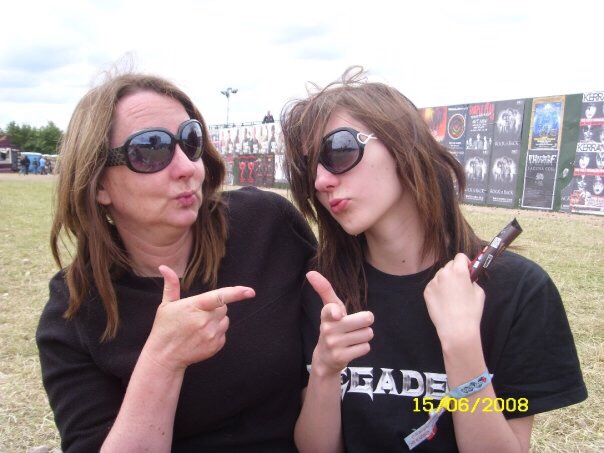
She loved music with Download festival being her second home. She came with me to my first rock gig and I think she has seen more bands than I have.

Like any high-class woman, she loved a pint or 5 and was not afraid to make a fool of herself. I’m sure many of you have great memories and photos which you should definitely share!

She loved exploring our ancestry and often went on little trips to little towns to find out more. Always trying to talk my ear off about our past, sometimes I wish I’d acted more interested. Don’t think she would have been convinced though. She also loved taking walks around local manor houses and national trust sites. Clumber Park is still one of the places I feel closest to her. I remember the time I was bitten by a squirrel while walking there and neither her nor dad took my rabies worries seriously.

She might have been a funky lady, but she still made sure to embarrass me like a good mum should. Though I’m pretty sure my friends thought she was cooler than me anyway.

We’d spend hours learning useless trivia such as every country and it’s flag, all the elements of the periodic table…all those useful life skills. Didn’t quite manage the capital cities of the world, but I’ll get there one day.

When I used to walk home late at night in Birmingham, she’d get google street-view up so she could walk home with me and if I didn’t text her after a night out, she’d Facebook all my friends to see if I was safe. Let’s be honest though, no student is awake at 9am on a good day, never mind after a heavy night!

She was a great friend and an amazing mum and I know I’m not the only one who misses her everyday.

I hope she would be proud of me and what I’m doing with my life.

There’s so much I could share about her, all the funny memories, all the inside jokes, but I know a lot of you remember her in your own way and I would love to hear your stories and see your photos.

Living with Agoraphobia

I thought I would post in honour of world mental health day.

I spoke before about what Agoraphobia is in this post, but today, I’m not talking about definitions and symptoms. I am talking about the daily lives of people living with this disorder and the realities of being Agoraphobic.

Everyone’s experience is going to be different. We all have different things that make us uncomfortable and we are all at different stages of recovery.

I think the best way to talk about this is using my own experience, rather than trying to generalise…so here it goes.

When I was first diagnosed, I had a lot of issues about a lot of things. Leaving my town or going on public transport was a big nope. In my mind I was thinking that if I got on a bus and started to panic, then I had two options. I could stay on the bus and have a panic attack, or I could get off the bus and wait half an hour to get on another bus home, alone and freaking out.

What is the best way to tackle this? Just don’t bother trying. Avoid it. At least that’s what you tell yourself, in reality, you are just making it worse.

I remember one time when I was a little better, I went to Nottingham for the day. We’d just had food and I was walking across the square. I just happened to look around me and noticed how many people there were. I instantly went dizzy and hot. I told my partner that I needed to leave. We started walking back to the car and and then it, one of my worse nightmares. I was sick. Right there in broad daylight in front of a crowd of people.

I had to sit down in a side street and pull myself together. I felt if I moved, I would be sick again. I was dizzy, nauseous, panicking and my head was fuzzy. I wanted to get back to the car, but I didn’t think I could make it safely back without being sick, falling over or dying. I was trapped.

It took about 20 minutes, but I finally managed to get up and drag myself back to the car. As soon as I closed the door, the feelings started to instantly subside. 30 seconds ago, my chest felt tight like I was having a heart attack and couldn’t breathe and had all the symptoms of the flu. Then once I was somewhere I felt safe, I felt better.

Even if I stuck with it and stayed, I would feel sick, extremely tired with a headache and walking round like I was in a dream for the rest of the day. It’s not pleasant.

It all might sound like an exaggeration, but I assure you it’s not. These physical symptoms are often the reason people with anxiety or panic disorders do what they can to avoid situations that make them feel uncomfortable.

The symptoms do feel like a heart attack crossed with a fever. Your chest is tight, you are hyperventilating, you are too hot and shaky, you feel sick and faint. Your fingers and toes go numb. Everything is louder and brighter, you can’t focus, you get confused and the only thing clear in your head is that you need to go home.

Even when you are not having a panic attack and you are just anxious, you can feel sick, your mind is fixated on how uncomfortable you feel, your heart is racing. It feels like you are waiting in the wings about to go on stage in front of hundreds of people, only to realise you don’t know your lines. It really doesn’t make for a nice day.

Agoraphobia can make you feel panicked in a room full of your immediate family and closest friends. It can make holidays and social events feel like a nightmare rather than a fun time. When I book in to have my hair done, there is a 50/50 chance I will make it. Other times I’ll be sat in McDonalds bathroom unable to come out.

I’m not looking for sympathy, I am trying to put it in a way that someone who has never experienced it can understand.

I have managed to make my way through most of this with a lot of hard work and therapy. I am stronger and I know myself better now I have fought this.

It’s not just feeling nervous or as easy as just stepping out of the house. It’s something you have to tackle consistently or you slide back down that slippery slope to being housebound again.

In other words, it’s pretty sh*t.

It’s not always like this though. I find comfort in going out and walking in nature. Some of my favourite places are the busiest (London, Brighton and Tokyo). When you achieve something, it honestly feels like you are invincible. It is such an amazing feeling.

I want to raise more awareness about this disorder because it is a lot more complex than people think.

Medication Is Not Failure

Disclaimer: I am not a medical professional. If you feel like you may have depression or you would like more information about medication or alternatives, please speak with your doctor.

It’s 2019. Science is the frontier of progress. Medical research has produced millions of peer-reviewed papers. Mental health is a hot topic and is gaining a lot of merit and understanding.

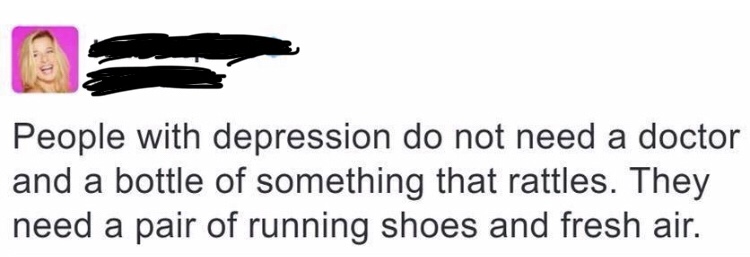
Somewhere in the UK a person hops on twitter and despite all of the above, posts this:

Oh dear.

I have seen an increasing amount of people online demonise medication, whether it be antidepressants or vaccinations and honestly, it angers me.

This blog will focus solely on antidepressants.

As someone that has been on Sertraline for almost 5 years, I can say that they changed my life. I went from lying in bed all day, eating maybe 300 calories and sleeping for 16+ hours, to getting out and finding joy in life again.
Hopefully, all being well, I’ll be looking to start the process of coming off them in the next few months.

Now, don’t get me wrong, there is absolutely nothing wrong with deciding against taking antidepressants. That is your choice and I wholeheartedly respect it. I am also an advocate of a healthy diet and exercise as a way to tackle depression.

Antidepressants don’t work for everyone and other people do not react well to certain types.
It is also important to note that they are not a perfect wonder drug and it’s important to speak with your doctor about the pros and cons and any concerns before taking the next step.

I am not however, an advocate of posts giving out misinformation and scaring people away who are struggling and looking for help. I’m also not an advocate of criticising the choices people make to tackle their issues and improve their well-being.

I’d like to address some popular beliefs about antidepressants


Taking medication is a sign of weakness

As the saying goes “you wouldn’t be called weak for having a cast fitted for a broken arm,” so why is what is essentially a cast for your mind any different? If you feel like you are unable to cope and are looking for a solution, there is no shame in contacting your doctor to look at your options. It is a positive step and can take a lot of courage to do (I know it did for me). Medication is a way of taking good care of yourself. It is thought around 70.9 million people in 2018 used anti depressants for anxiety and depression in the UK. You are definitely not alone.

Antidepressants will make you suicidal

I’m not going to lie, before I started on Sertraline, my doctor did warn me that for the first month, I may feel worse before I feel better. She also said that if I did start to feel suicidal or have suicidal thoughts to get in touch immediately. Alternatively if you are unable to get in with your GP straight away and ending your life is a serious consideration for you, visit your local hospital or contact the emergency services. During your first month or two, your GP will monitor you closely to see how you are doing. However other research suggests that the risk of suicide is no higher than a placebo.

Antidepressants are a life long addiction

Different people will take antidepressants for a different amount of time, the aim is to make you feel balanced and to get your depression under control. At this point you and your doctor will discuss next steps and may looking at stopping in a controlled way. Some people do take antidepressants for a long-period of time, others don’t. It all depends on your situation. Your body will exhibit mild withdrawal symptoms, known as Discontinuation Syndrome during the process of coming off of your medication (or more severe symptoms of you stop suddenly, which is strongly discouraged)

Antidepressants are a ‘happy pill’

It’s important to be aware that antidepressants aren’t designed to make you feel happy. They are there to make you feel balanced. They will lessen you symptoms of depression. For example, they can give you more energy, motivation and can make you feel less flat.

Antidepressants are the solutions to all your problems

As said before, medication can improve your situation, but it not a quick fix. Treatment works best as a mixture of medication and therapy. On top of this, self-care is very important. A healthy diet, exercise, a healthy amount of sleep and taking time to do things you enjoy can help you feel balanced.

The side effects are bad

The initial couple of months while your body is adjusting, you may have some symptoms such as nausea, drowsiness, diarrhea/constipation, dizziness among others. These symptoms usually go away as the weeks progress. If however these persist, you have symptoms such as suicidal ideation/intent or you continue to feel worse, get in touch with you GP and they will look to try you on a different medication. There are several different options for you, so don’t be disheartened if the first drug you try doesn’t work.

If I don’t start feeling better after the first couple of weeks, they aren’t working

In the first month it can be difficult to tell whether your medication is working. At this point your body is still getting used to the changes so it’s very important that you don’t stop taking them and you continue to take them consistently. To get from severe depression to where I am now, I would say it took about 10 months and some therapy. If however after a month or so you don’t feel like it is doing anything at all, speak with your GP and look at your options.


Everyone has their own battle to fight and should be able to do so without judgement. Whether you rely on medication or a more natural approach, we are in this together. Lets support each other.