This is something I have been meaning to write about for a while. I feel some people might not agree, but it’s something more people need to understand.
Mental illness is still being stigmatised. Some disorders are misunderstood, others aren’t taken seriously and undermined. Many organisations are yet to put into practice a solid structure and policies to help those with illnesses thrive. We spend so much time raising awareness to others outside the community, we sometimes miss the important issues within.
Some people are using the idea of supporting those with mental illness to their advantage by using it to excuse toxic and abusive behaviours by blaming their diagnoses.
I’m ashamed to admit that before I got help, I was an arsehole and blamed all my anger and toxic behaviour on what I was going through. It wasn’t until I stopped for a minute to evaluate my life, did I realise that I needed to change.
So I’m just going to come out and say it. Mental illness is not a free pass to be cruel or toxic. No matter what your diagnosis, if you are repeatedly negative towards those trying to support you, you need to have a serious look at your actions.
Before I go into what kind of actions I am talking about, I would first like to say that I am not talking about involuntary symptoms. I am explicitly talking about behavioural choices made that negatively impact those around us.
Types of behaviours used to project or misdirect anger/frustration, manipulate people and abuse others are choices.
If you repeatedly say cruel things to others when you are angry or stressed, this isn’t okay.
If you threaten to break up with your partner when you aren’t getting your own way, this isn’t okay.
If someone confronts you about your behaviour and you play the victim, blaming your mental illness and placing guilt tripping them, this isn’t okay.
These behaviours can be changed and must be addressed, because it is not fair to those trying to support you.
If you find yourself constantly hurting people with the things you say or do, it’s important that you reach out for help to tackle this.
If you know you are repeating this pattern of behaviour and someone approaches you about it, don’t immediately call them out for attacking you or bullying. Take some time and reflect on what they have said, is this the case?
In brushing people off and taking no responsibility will ultimately push them away and you’ll find yourself alone.
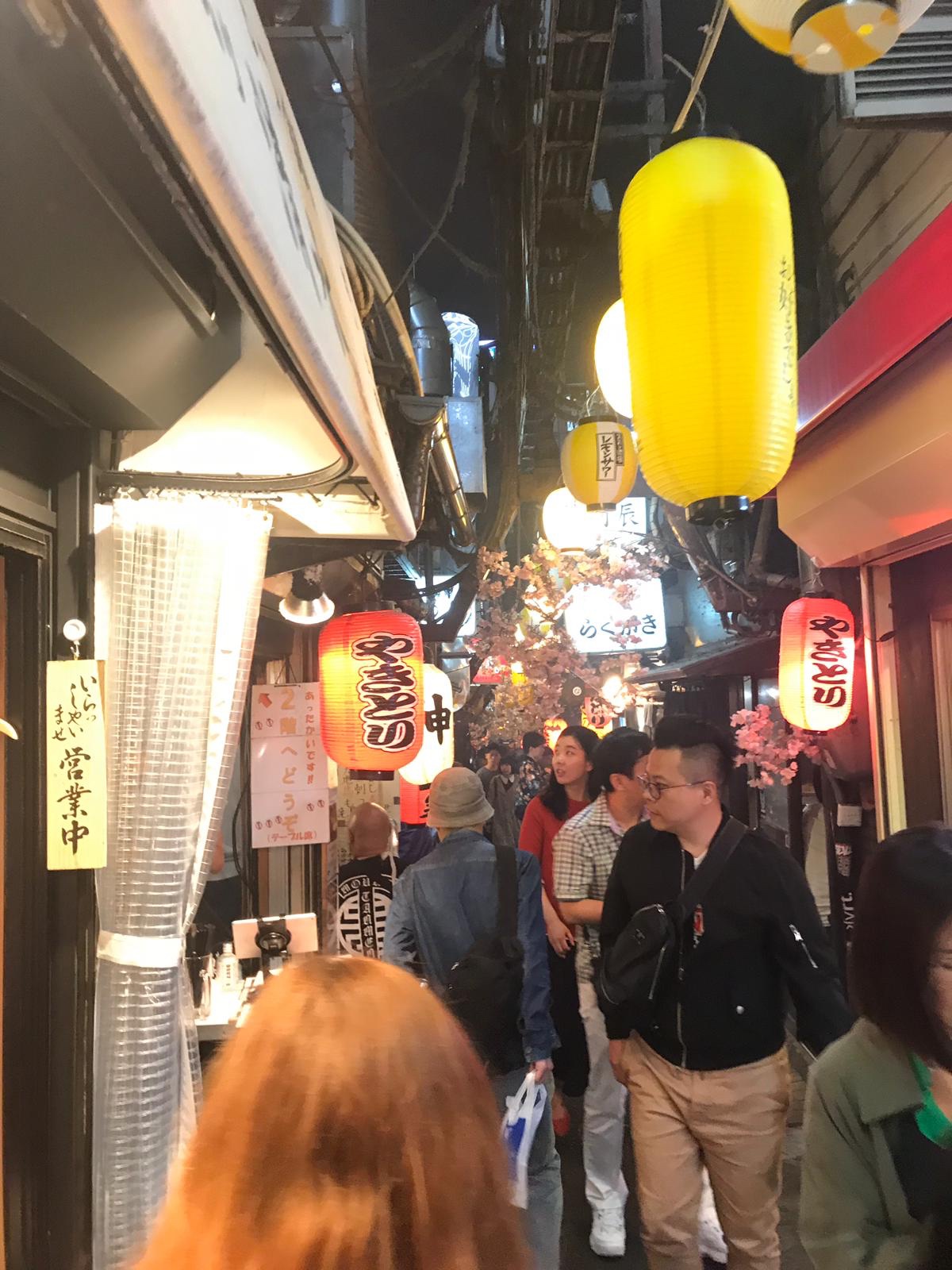
Today I should be coming home from Japan, but as you may have guessed I didn’t get to go. It made me think of how different things are in comparison to last year. This time in 2019 I was taking a year off from work, living off my savings and even though I felt like I had made some progress, I was still over-planning, I was still unable to get to Birmingham and was a 50/50 chance I would get on the plane for my first holiday abroad.
This year I am working, going out for meals, coming off of medication and before COVID hit, I was actually 100% excited to go back to Tokyo. The change in myself is huge. Before lockdown, I was sitting in Yo! Sushi with my partner eating spicy food after a brief meet up with friends. That is something I could have only dreamed of even four months before.
I have a job which I enjoy and look forward to, it’s only part-time but after two six-day weeks with dining out, babysitting and the gym sprinkled in, I have proven to myself that I am able to take on more. I have attended food festivals, dined out and spent more time in Birmingham. I honestly owe a lot to my holiday last year.
No, I’m not cured. These things do not come easy and some days I still need to mentally prepare myself to walk out the door. I am, however, a lot more confident, a lot happier and I just know I can do whatever I put my mind to. I would say to anyone who is afraid to take the next step, not just in Agoraphobia recovery but in anything. Do it carefully, do it sensibly and you will not regret the decision to just do it. It could change your life.
So what’s next for me?
Well, I am planning more time away and even a solo holiday, but that may be a little further in the future. I’m getting out more, I’m hoping to be more confident around food and I MIGHT even socialise but let’s not get hasty.
Disclaimer: I am not a medical professional. If you feel like you may have depression or you would like more information about medication or alternatives, please speak with your doctor.
It’s 2019. Science is the frontier of progress. Medical research has produced millions of peer-reviewed papers. Mental health is a hot topic and is gaining a lot of merit and understanding.
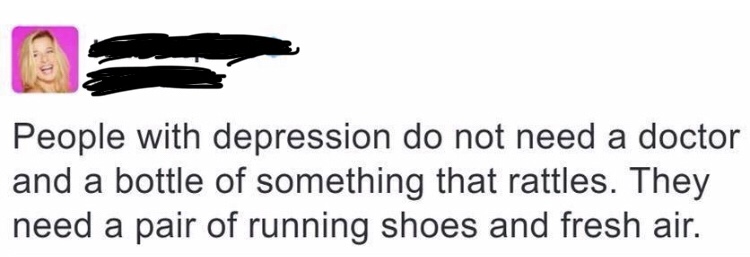
Somewhere in the UK a person hops on twitter and despite all of the above, posts this:
Oh dear.
I have seen an increasing amount of people online demonise medication, whether it be antidepressants or vaccinations and honestly, it angers me.
This blog will focus solely on antidepressants.
As someone that has been on Sertraline for almost 5 years, I can say that they changed my life. I went from lying in bed all day, eating maybe 300 calories and sleeping for 16+ hours, to getting out and finding joy in life again. Hopefully, all being well, I’ll be looking to start the process of coming off them in the next few months.
Now, don’t get me wrong, there is absolutely nothing wrong with deciding against taking antidepressants. That is your choice and I wholeheartedly respect it. I am also an advocate of a healthy diet and exercise as a way to tackle depression.
Antidepressants don’t work for everyone and other people do not react well to certain types. It is also important to note that they are not a perfect wonder drug and it’s important to speak with your doctor about the pros and cons and any concerns before taking the next step.
I am not however, an advocate of posts giving out misinformation and scaring people away who are struggling and looking for help. I’m also not an advocate of criticising the choices people make to tackle their issues and improve their well-being.
I’d like to address some popular beliefs about antidepressants
Taking medication is a sign of weakness
As the saying goes “you wouldn’t be called weak for having a cast fitted for a broken arm,” so why is what is essentially a cast for your mind any different? If you feel like you are unable to cope and are looking for a solution, there is no shame in contacting your doctor to look at your options. It is a positive step and can take a lot of courage to do (I know it did for me). Medication is a way of taking good care of yourself. It is thought around 70.9 million people in 2018 used anti depressants for anxiety and depression in the UK. You are definitely not alone.
Antidepressants will make you suicidal
I’m not going to lie, before I started on Sertraline, my doctor did warn me that for the first month, I may feel worse before I feel better. She also said that if I did start to feel suicidal or have suicidal thoughts to get in touch immediately. Alternatively if you are unable to get in with your GP straight away and ending your life is a serious consideration for you, visit your local hospital or contact the emergency services. During your first month or two, your GP will monitor you closely to see how you are doing. However other research suggests that the risk of suicide is no higher than a placebo.
Antidepressants are a life long addiction
Different people will take antidepressants for a different amount of time, the aim is to make you feel balanced and to get your depression under control. At this point you and your doctor will discuss next steps and may looking at stopping in a controlled way. Some people do take antidepressants for a long-period of time, others don’t. It all depends on your situation. Your body will exhibit mild withdrawal symptoms, known as Discontinuation Syndrome during the process of coming off of your medication (or more severe symptoms of you stop suddenly, which is strongly discouraged)
Antidepressants are a ‘happy pill’
It’s important to be aware that antidepressants aren’t designed to make you feel happy. They are there to make you feel balanced. They will lessen you symptoms of depression. For example, they can give you more energy, motivation and can make you feel less flat.
Antidepressants are the solutions to all your problems
As said before, medication can improve your situation, but it not a quick fix. Treatment works best as a mixture of medication and therapy. On top of this, self-care is very important. A healthy diet, exercise, a healthy amount of sleep and taking time to do things you enjoy can help you feel balanced.
The side effects are bad
The initial couple of months while your body is adjusting, you may have some symptoms such as nausea, drowsiness, diarrhea/constipation, dizziness among others. These symptoms usually go away as the weeks progress. If however these persist, you have symptoms such as suicidal ideation/intent or you continue to feel worse, get in touch with you GP and they will look to try you on a different medication. There are several different options for you, so don’t be disheartened if the first drug you try doesn’t work.
If I don’t start feeling better after the first couple of weeks, they aren’t working
In the first month it can be difficult to tell whether your medication is working. At this point your body is still getting used to the changes so it’s very important that you don’t stop taking them and you continue to take them consistently. To get from severe depression to where I am now, I would say it took about 10 months and some therapy. If however after a month or so you don’t feel like it is doing anything at all, speak with your GP and look at your options.
Everyone has their own battle to fight and should be able to do so without judgement. Whether you rely on medication or a more natural approach, we are in this together. Lets support each other.
It’s been 5 years now since my panic attack And while I have definitely improved over the years, I am still definitely not your average girl.
I have been wondering quite a lot recently whether if I continue to step out of my comfort zone, this will all go away.
I can move around my hometown quite easily, although if I need to travel any further or I have to be somewhere, I still get very anxious before leaving the house.
I’m still using unhelpful coping behaviours (wearing loose clothes, carrying water, excessive planning) which I am working on.
Eating out at restaurants is still impossible unless it’s somewhere I’m very familiar with and it’s within a small group.
Socialising is completely out of the window, although I am happy being on my own. I don’t think it’s healthy though.
Thinking about the future, will I have enough time to build a career and travel the world before my baby clock runs out? Or will this be a struggle for years to come?
Who knows?
I think one day I will be able to go and eat food in a large group wearing jeans (I know, I have crazy high aspirations), but will I ever be truly comfortable?
I think one day I will be able to have my dream career, but will I be able to cope with the stress long-term?
I think one day I will look back at this post and smile because everything will be alright
So a couple of posts back, I spoke about my upcoming trip to Japan.
The day finally came…
I had a panic attack on the way there and was given oxygen and a wheelchair. I also cried and nearly got a plane back home while waiting for our connecting flight in Dubai. It took me a couple of days after arriving to be confident to leave the hotel and eat outside of my room and a couple more after that to go any further than the park across the road.
But
After pushing myself every day, planning and taking care of myself, I can say that is the happiest and most accomplished I have felt it a very very long time.
A few achievements:
Getting on an insanely crowded train
Travelling to the other side of Tokyo on my own
Visiting an art gallery with limited signs, no floor plan and hard to find exhibits.
Braving the tiny aisles of Don Quijote at an insanely busy time
Getting completely lost and keeping my head (Embarrassed to say more than once and I had Google Maps)
Travelling 11 hours to Dubai, getting 3 hours sleep and then going out to explore with no idea where I was going
After getting back to the hotel in Dubai, going straight to the hotel restaurant, eating a meal quickly and getting in a car back to the airport. No time for resting.
Braving the Shinjuku station area at rush hour
Catching 11 trains in one day (my feet are still recovering from the adventuring).
Safe to say I thrived.
I feel like a different person in all honesty.
If you are looking for something completely different to your everyday and feel ready for the challenge, I would definitely recommend Tokyo.
Here’s why…
As I travel more and see more countries, I’ll be able to make more posts giving you the run down. I know before I went, I had seen good reviews from anxious travelers, but I had hoped for something a little more comprehensive. I hope you find this useful.
Get in touch if you have any questions and I will answer them the best I can!
“What ifs” are not in themselves an issue, e.g. “what if the traffic is bad?” As a rationale to leave earlier, ensuring that you arrive on time. The problem comes when the statement starts negatively impacting your daily functioning. E.g. “what if the traffic is bad?” As an excuse to stay at home in case you have a panic attack and can’t easily get to a ‘safe place.’
This one little phrase and how you approach it can be make or break.
Before I went to therapy, I hadn’t really given much attention to my specific thoughts, only “oh my god I need to leave now!” However after sitting down with my therapist, she made me realise that the anticipation of leaving the house culminated in a lot of “what if?”
Here are some I still battle with:
“What if I get to the restaurant and it’s busy and I need to leave? What will people think?”
“What if I’m with people that don’t understand and I start panicking?”
“What if I can’t go back to work without panicking and end up in the same state as last time?”
“What if people just think I’m an inconvenience?”
“What if I never amount to anything and have wasted my life?”
“What if I eat and bloat and then my clothes get too tight and I feel sick?”
“What if I get too far away from my ‘base’ and can’t get back easily?”
I know some of these seem silly to most people, I know it’s silly. But in my mind, there is nothing worse than feeling like I have to be in a certain place where I can’t just leave without a) having to explain myself; b) causing a scene or c) ruining the event. It rules my life and makes me miss out on social events and great opportunities.
Uncertainty
Uncertainty is a major player when it comes to anxiety, especially Agoraphobia. Using ‘what if’ and worrying can make it feel like you are taking back control, preparing for the unknown, when in reality you are solidifying your negative beliefs, affirming your behaviour and continuing the cycle of anxiety.
It can manifest in over-preparing, trying to find solutions to things that are out of your control and avoidance.
It is important to stop and evaluate. Does worrying make anything more certain? For example, does worrying about an exam help you to pass?
Learning to accept uncertainty is an important step.
Little steps such as looking at solutions to problems who’s outcome you can impact as opposed to problems you cannot change can be a reassurance.
Another way could be to keep a diary of facing uncertainties. In which you note:
Diary Section
Example
The Situation
The Train
Feared Outcome
Busy train and panic attack
Actual Outcome
It was busy, didn’t have panic attack
How You Coped
Practiced breathing, rationalised my thoughts
Over time, you will see that you are able to manage uncertain situations and they are not as terrifying as they first seem.
A little CBT and challenging your beliefs can go a long way.
For me this is an ongoing process and no matter how well I do, my initial reaction to leaving the house and the moment before I step out the door is “arghhhh, what if..?”
I’m sure with time I’ll get there and so will you.












 Life With A